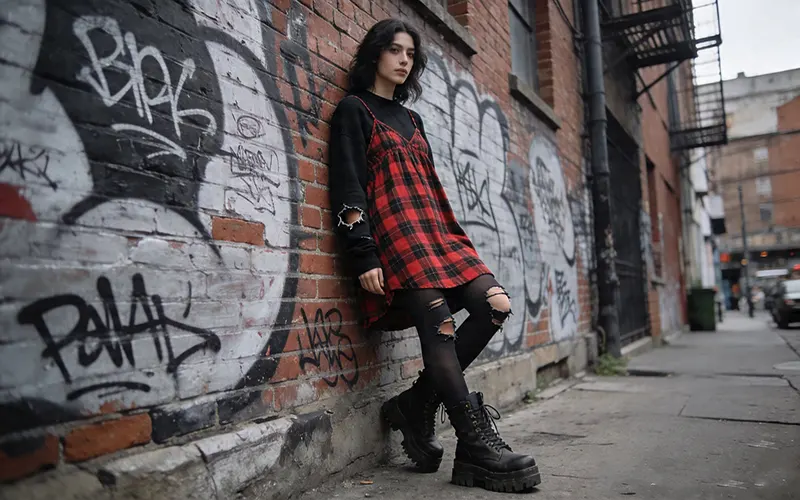
In the cyclical nature of fashion, the mid-2020s have seen a profound return to the raw, unpolished energy of the 1990s. At the epicenter of this resurgence is the oversized plaid slip dress. What was once a symbol of “slacker chic” and sartorial rebellion has been re-engineered for 2026 as a sophisticated modular unit. No longer just a thrift-store find, the modern plaid slip dress is a study in textile geometry and layering systems, offering a high-performance solution for those who value subcultural heritage and functional utility.
To understand the slip dress is to understand the “Anti-Fashion” movement. Originally popularized on the runways of the early 90s—most notably during Marc Jacobs’ infamous 1992 Perry Ellis collection—the look combined the delicate nature of a lingerie staple with the industrial grit of the Pacific Northwest. Today, this “High-Low” tension is the ultimate tool for the modern wardrobe.
The Anatomy of the 90s Silhouette
The success of an oversized slip dress depends on the “Architecture of the Drape.” While a standard slip dress relies on a body-skimming bias cut, the oversized 90s variant often utilizes a straight-grain cut to provide a more “architectural” and boxy feel.
1. Bias Cut vs. Straight Cut
In the 2026 revival, high-end designers are utilizing a “modified bias.” This provides enough fluid movement to prevent the plaid pattern from looking static, while maintaining a generous width through the waist and hips. This ensures that when the dress is layered over heavier garments, it doesn’t “clinch” or distort the base layer.
2. Plaid Geometry and Visual Weight
The choice of plaid—whether it be a classic Scottish Tartan, a muted Gingham, or a sophisticated Glen Plaid—dictates the visual weight of the outfit.
- Large-Scale Tartans: These act as a “maximalist” statement and work best when paired with minimalist, monochromatic base layers.
- Micro-Glen Plaids: These offer a more “academic” grunge feel, lending themselves to professional layering with blazers and tailored trousers.
The Science of the Layering System
The oversized slip dress is rarely worn alone in 2026; it is the “Shell” of a multi-component layering system. This modularity is what gives the garment its 4-season utility.
The Base Layer: From Cotton to Tech-Silk
The “classic mod” pairing of a white baby tee remains a staple, but for the high-authority professional, the base layer has evolved.
- The Winter Base: A fine-gauge merino silk turtleneck provides essential thermoregulation without adding bulk.
- The Summer Base: A high-tech, moisture-wicking rib-knit tank allows the plaid slip to act as a breathable outer layer in high-humidity environments.
The Outer Shell: Tactile Contrast
To ground the “delicate” nature of the slip, the outer layer must provide a heavy tactile contrast. Pairing the brushed cotton of a plaid dress with a structured leather “Matrix” coat or an oversized distressed denim jacket creates a visual narrative of resilience and softness.
Seasonal Layering Guide: 2026 Modular Edition
| Season | Base Layer | Outer Layer | Footwear |
| Spring | White pima cotton tee. | Unstructured linen blazer. | Platform loafers. |
| Summer | Minimalist bralette. | Tied oversized white shirt. | Lug-sole sandals. |
| Fall | Black mesh bodysuit. | Distressed leather biker jacket. | Combat boots. |
| Winter | Merino silk turtleneck. | Heavyweight faux-fur or wool coat. | Knee-high lug boots. |
Materiality: From Flannel to High-End Silk
While the original grunge movement relied on cheap, second-hand flannel, the 2026 iteration focuses on Material Integrity.
- Sand-Washed Silk: For a luxury grunge aesthetic, designers are using heavy-weight silk that has been treated to have a matte, “peeled” texture. This provides the 90s look with a drape that feels substantial and expensive.
- Brushed Organic Cotton: To maintain the “heritage” feel, many brands are utilizing organic cotton flannels that have been brushed for softness but treated for high tensile strength, ensuring the dress doesn’t lose its shape over years of wear.
- PFC-Free Water Repellency: A new technical addition to 2026 plaid fabrics is a “dry” water-repellent finish, allowing the dress to withstand light spring rain—a functional nod to its Seattle roots.
Engineering for Modern Utility
The transition of the slip dress from a bedroom garment to a street-style powerhouse required specific mechanical updates.
- Adjustable Hardware: High-quality oversized slips now feature heavy-duty matte metal sliders on the spaghetti straps. This allows the wearer to drop the neckline for a “grunge-slouch” look or raise it to accommodate a professional turtleneck.
- Side-Slits for Mobility: Because these dresses are often worn over heavy denim or leather trousers (the “dress-over-pants” 2026 revival), deep side-slits are essential. They provide a full range of motion and prevent the fabric from bunching during transit.
- Reinforced Side-Seam Pockets: In a move toward total utility, the oversized volume of the dress allows for the inclusion of deep pockets. These are reinforced with internal tape to ensure a smartphone doesn’t “drag” the delicate fabric.
Sustainability and the Circular Economy
The plaid slip dress is a “Circular Hero.” Because of its simple construction and durable fabric choices, it is one of the easiest garments to repair and repurpose.
In 2026, the “Ethical Origin of the Tartan” is a major selling point. Consumers can often scan a Digital Product Passport to see the blockchain-verified path of the wool or cotton back to regenerative farms. This transparency ensures that the “rebellion” of grunge isn’t just aesthetic, but ethical—rebelling against the fast-fashion cycles that characterized the early 2000s.
Styling Rule of Thumb
“Proportion is the pivot point of grunge. If your dress is oversized, your footwear must be substantial. A delicate slip dress paired with a thin-soled shoe looks like a mistake; paired with a 2-inch lug-sole combat boot, it looks like an intentional architectural choice.”
The Immortal Rebellion
The oversized 90s vintage plaid slip dress persists in 2026 because it offers something few other garments can: a perfect balance of comfort, nostalgia, and technical versatility. It is a “Modular Unit” that adapts to the wearer’s life, transitioning seamlessly across seasons and subcultures.
In the 2026 landscape, we don’t just wear the past; we re-engineer it. By combining the “slacker” silhouettes of the grunge era with modern textile science and ethical supply chains, the plaid slip dress has become a symbol of sartorial sovereignty. It is proof that a simple, oversized “slip” of fabric can hold the weight of history while moving effortlessly into the future.